
More Than a Short Introduction
A five-session experience can help you establish direction, clarify important concepts, and begin strengthening your research and implementation process.
Nine sessions provide additional time to build on that foundation.
You can study more than one major topic, explore complex subjects across multiple meetings, and return to earlier conclusions after conducting additional research.
This continuity matters because markets, economic conditions, companies, and technologies continue to change. New information may strengthen or challenge what you previously believed.
Nine sessions give you the opportunity to learn, apply what you have learned, ask better questions, and refine your understanding over time.
A Private Learning Experience Built Around Your Progress
This is not a fixed course that requires every participant to follow the same curriculum.
- A newer investor may use the program to build a strong foundation, understand different account types, and develop more disciplined research habits.
- A business owner may explore tax-efficient investing, business retirement accounts, personal wealth outside the business, and technologies that could affect the company’s industry.
- Someone pursuing financial independence may focus on income-producing investments, account structures, taxation, risk, and the role investing can play in reducing dependence on wages.
- An individual who is retired or approaching retirement may want to better understand annuities, investment income, account withdrawals, taxation, and the continued role of growth.
- A more experienced investor may concentrate on artificial intelligence, crypto, digital assets, disruptive technologies, changing market conditions, or more advanced research methods.
Your nine sessions may cover several areas or focus more deeply on selected subjects.
What You May Explore
Traditional Investments
Understand stocks, bonds, mutual funds, exchange-traded funds, and other established ways to participate in financial markets.
Learn how different investments may respond to economic conditions, changes in interest rates, market cycles, and investor behavior.
Annuities and Income-Focused Investments
Learn how different types of annuities and income-producing investments work.
Explore their features, potential uses, costs, limitations, liquidity restrictions, and the role they may play for investors seeking income or principal protection features.
Individual Investment Accounts
Explore Traditional IRAs, Roth IRAs, taxable investment accounts, and other commonly used account types.
Learn how contribution rules, access restrictions, withdrawals, and taxation may differ.
Business-Owner Investment Accounts
Learn about SEP IRAs, SIMPLE IRAs, Solo 401(k)s, and other retirement account options available to business owners and self-employed individuals.
Explore how these accounts differ and why business owners should understand the options available for building personal wealth beyond their company.
Tax-Efficient Investing
Understand the general differences between taxable, tax-deferred, and tax-free investing.
Learn how account type, investment location, contributions, withdrawals, and taxation can affect how efficiently wealth is accumulated and accessed.
Risk and Investment Decision-Making
Strengthen your understanding of risk, volatility, diversification, liquidity, fees, concentration, and investment time horizon.
Learn why an investment may be appropriate for one objective or time frame but less appropriate for another.
Markets and the Economy
Explore how inflation, interest rates, government policy, economic growth, market cycles, and investor psychology can affect different types of investments.
The goal is to help you better understand why markets move and how changing conditions may affect different areas of the economy.
Investment Research
Learn how to evaluate companies, funds, industries, technologies, digital assets, and investment ideas using credible information and a disciplined research process.
Develop stronger questions, compare sources, identify important risks, and distinguish evidence-based research from speculation.
Artificial Intelligence
Explore how artificial intelligence is changing business models, productivity, decision-making, and the competitive position of companies across industries.
Learn how to use AI tools to research companies, compare information, analyze investment themes, test assumptions, and strengthen your independent judgment.
Crypto, Digital Assets, Blockchain, and Tokenization
Understand how crypto and digital assets are connected to blockchain technology.
Explore how these technologies are creating new ways to transfer value, record ownership, build financial products, and represent real-world assets digitally through tokenization.
You may also study use cases, adoption trends, network design, market risks, custody, and the differences between the technology and the assets built on it.
Emerging Innovations
Explore biotechnology, robotics, quantum computing, cybersecurity, energy innovation, and other developing technologies that may influence industries and future economic growth.
The focus is not simply on what may be possible. It is also on adoption, business application, competition, risk, and the evidence needed to evaluate an investment theme responsibly.
Investment Thesis Development
Learn how to organize your research and document why an investment idea may be attractive.
Identify the central opportunity, supporting evidence, major risks, assumptions, and developments that could strengthen or weaken your conclusion.
Why Choose Nine Sessions?
The nine-session program is designed for learners who want more than a short educational experience but do not yet need the frequency or depth of a 12-session or 24-session program.
The additional sessions give you more room to:
- Explore multiple investment and wealth-building topics
- Apply what you learn between meetings
- Return with new questions based on your research
- Revisit earlier conclusions as new information becomes available
- Follow changing markets, technologies, and economic conditions
- Build and refine more than one investment thesis
- Strengthen how you use AI for investment research and analysis
- Develop more consistent habits for organizing and evaluating information
- Build greater independence in your research process
Nine sessions create enough continuity to make progress visible.
You are not limited to a single area of focus, and you do not have to rush through complex subjects.
What You Can Gain From the Experience
By the end of your nine sessions, you may have:
- A clearer understanding of traditional and emerging investments
- Greater familiarity with individual and business-owner account options
- A stronger understanding of tax-efficient investing concepts
- Improved ability to evaluate companies, funds, technologies, and digital assets
- A more disciplined research process
- Better questions for evaluating opportunities and risks
- Greater confidence using AI as a research tool
- One or more documented investment theses
- A clearer framework for continuing your education independently
The specific outcomes will depend on your starting point, areas of interest, and how you choose to use the sessions.
Who This Experience Is Designed For
New Investors
Build a stronger foundation and develop better research habits without rushing through important concepts.
Experienced Investors
Deepen your understanding of emerging technologies, changing markets, tax-efficient investing, and advanced research methods.
Business Owners and Entrepreneurs
Learn about business retirement accounts, diversification, tax-efficient investing, and ways to build personal wealth beyond the value of the business.
You may also explore technologies and economic developments that could affect your industry.
Individuals Pursuing Financial Independence
Strengthen your understanding of investments, income-producing assets, account structures, taxation, and risk.
The broader objective is to reduce dependence on wages so that work can become a choice rather than a financial necessity.
Retirees and Those Approaching Retirement
Better understand annuities, income-producing investments, retirement accounts, taxation, withdrawal considerations, and the role of continued growth.
Learners Studying Disruptive Innovation
Explore artificial intelligence, crypto, blockchain, biotechnology, robotics, quantum computing, and other emerging technologies with greater depth and context.
The Legacy Visions Innovation Investing Toolkit
Every nine-session client receives the Legacy Visions Innovation Investing Toolkit.
AI Research Prompt Guides
Use structured prompts to research companies, technologies, economic developments, digital assets, and investment themes more effectively.
The guides are designed to help you ask stronger questions, compare information, challenge assumptions, and avoid treating AI-generated output as unquestioned fact.
Investment Thesis Framework
Document your central idea, supporting evidence, assumptions, potential opportunity, major risks, and conditions that could change your conclusion.
The nine-session structure gives you time to build, review, and refine more than one thesis as your research develops.
Curated Research and Educational Resources
Access tools, publications, data platforms, and educational resources that can help you stay informed about markets, economics, digital assets, and disruptive innovation.
These resources are designed to support your continued learning between sessions and after the program is complete.
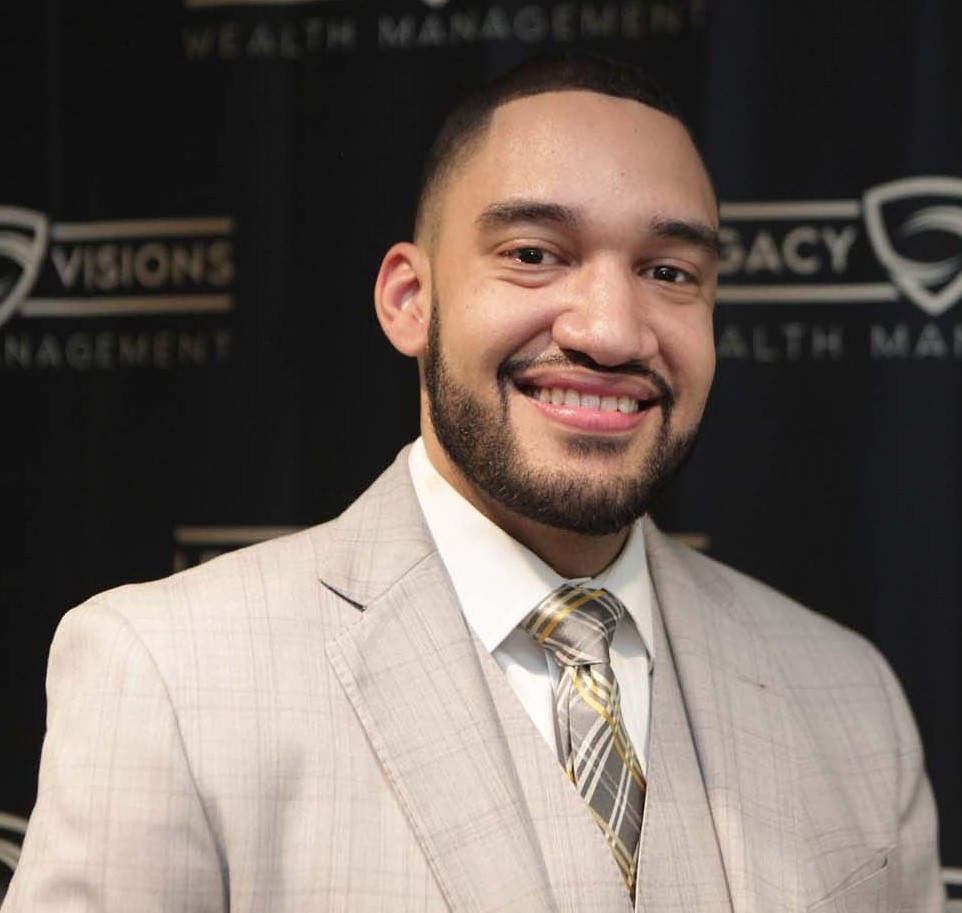
Meet Your Instructor
Lawrence G. Hodges III is the Founder and CEO of Legacy Visions Wealth Management and Legacy Visions Digital Assets, as well as the Founder of Legacy Visions Wealth Academy. He is a financial strategist, wealth educator, and crypto education instructor with more than 17 years of experience across banking, financial advising, and client education.
He holds a bachelor’s degree in Financial Services with a minor in Business Law from the University of Toledo. He has passed the Series 7 and Series 66 examinations and maintains active Life, Health, and Variable Annuity insurance licenses. His professional development also includes completion of the Wealth Management Certified Professional® program through The American College of Financial Services and the Certified Blockchain and Digital Assets program through the Digital Assets Council of Financial Professionals.
His career began with Edward Jones in 2008. He later relocated to Houston and joined JPMorgan Chase as a Private Client Advisor, where he managed client portfolios and guided individuals and families through goals-based financial planning.
In 2021, he launched Legacy Visions Wealth Management as a full-service independent firm. By 2025, he had evolved the practice into a wealth education and innovation literacy platform. This transition allowed him to focus more fully on teaching the investment concepts, financial systems, and emerging technologies that are reshaping how wealth is understood and built.
His background in computer science and engineering technology, combined with his personal experience investing in crypto since 2020 and his completed professional education in blockchain, digital assets, and wealth management, gives him a distinctive perspective. He teaches artificial intelligence, crypto, blockchain, and digital assets through the broader connection between money, technology, networks, ownership, and economic change.
Lawrence currently serves as an instructor with Dr. Boyce Watkins’ Black Business School through the Black Crypto Investing Club. He is also a member of Alpha Phi Alpha Fraternity, Inc.
His sessions are designed for learners who want more than surface-level information. They provide context, clarity, and a stronger framework for understanding how money, investing, technology, and opportunity are changing.
Frequently Asked Questions
What makes the nine-session program different from the five-session program?
The five-session program is designed to provide greater clarity, introduce a research framework, and help you explore the subjects that matter most to you.
The nine-session program provides additional continuity.
You have more time to explore multiple topics, apply what you learn, return with stronger questions, revisit earlier conclusions, and refine your research process as markets and technologies change.
Do I need prior investment knowledge?
No.
A newer investor can begin with foundational concepts.
An experienced investor can move directly into deeper research, emerging technologies, market developments, or specialized investment topics.
The sessions begin where you are.
Do I have to follow a set curriculum?
No.
Your sessions are shaped around your current knowledge, interests, and learning priorities.
You may explore several areas or focus more deeply on selected subjects.
Can I schedule the sessions at my own pace?
Yes.
You may schedule your sessions at the pace that best supports your learning, subject to availability and the 12-month completion period.
Is this relevant for business owners?
Yes.
Business owners may explore SEP IRAs, SIMPLE IRAs, Solo 401(k)s, other retirement account options, tax-efficient investing, diversification, and ways to build personal wealth outside the business.
The sessions may also explore technologies and economic trends that could affect the owner’s industry.
Is this only for people preparing for retirement?
No.
Retirement may be one objective, but it is not the only objective.
The program may also support individuals pursuing financial independence, business owners building wealth beyond their company, experienced investors expanding their knowledge, and retirees who want to better understand how their investments continue to support their desired quality of life.
Will we discuss taxes?
Yes.
Taxation is an important part of understanding investments, retirement accounts, business-owner strategies, income, capital gains, distributions, and wealth-building decisions.
Your sessions may include education on topics such as:
- How different types of investment income may be taxed
- Capital gains and capital losses
- Tax treatment of dividends and interest
- Taxable, tax-deferred, and tax-free accounts
- Retirement-account contributions and withdrawals
- Required minimum distributions
- Annuity taxation
- Tax considerations for business owners and self-employed individuals
- The general tax implications of selling, exchanging, or transferring investments
- Tax concepts related to crypto and other digital assets
- How taxes may affect investment returns and withdrawal strategies
These discussions are intended to help you understand the concepts, terminology, and questions that may be relevant to your decisions.
For guidance about how tax rules apply to your specific circumstances, you should consult a qualified CPA or tax professional.
Will Lawrence tell me which investments to buy?
No personalized investment recommendations are provided.
However, specific companies, stocks, funds, crypto assets, commodities, technologies, and other investments may be discussed in detail. The discussion may include business fundamentals, industry developments, adoption trends, risks, valuation considerations, and, when appropriate, technical analysis.
You may ask questions about any investment or opportunity you want to understand more clearly.
Lawrence may also share examples from his own research, investing experience, and portfolio decisions when they help explain how an experienced financial professional evaluates an opportunity.
The purpose is to help you understand the factors that may support or challenge an investment decision. You will not be told whether you personally should buy, sell, or hold a particular asset. That decision remains yours.
You will be provided with research tools, frameworks, and questions that can help you evaluate opportunities more independently and understand how a financial professional may approach the decision-making process.
How is this different from financial coaching?
Wealth education focuses on investing.
It may include investment products, account types, taxes, market behavior, research methods, annuities, business-owner accounts, digital assets, and emerging technologies.
Financial coaching focuses more broadly on your personal financial life. It may include budgeting, debt, financial habits, goal setting, organization, and accountability.
Will I learn how to use artificial intelligence for investment research?
Yes.
You may learn how to use AI tools to research companies, compare sources, analyze investment themes, organize information, test assumptions, and improve the quality of your questions.
You will also learn why AI output should be verified rather than accepted automatically.
How do I schedule my sessions?
After purchasing, you will receive access to Lawrence’s scheduling calendar.
Sessions are conducted virtually. In-person meetings at The Ion in Houston may be available when mutually agreed upon.
How long do I have to use my sessions?
Your nine sessions must be scheduled within 12 months of purchase.
What happens if I complete all nine sessions and want to continue?
You may enroll in another wealth education program or move into a higher-session option if you want more time, deeper study, or continued learning.
What is the refund policy?
Sessions are nonrefundable after purchase.
Prospective clients who have questions before enrolling may schedule a complimentary consultation to determine whether the program is a good fit.